
Branch history
From the Scots National League of 1921 to the fight for independence today – this is the story of the SNP in London.
Since the formation of the SNP in 1934, the party has had a presence in the UK capital. The London branch is one of only two outside Scotland (the other is in Brussels) and as, along with HQ branch, it embraces members from around the world, it is also one of the largest in the party. However given it has no direct connection with constituencies and wards, it has a slightly different remit.
While sharing the traditional objective of raising funds, discussing policy initiatives and proposing motions to conference, branch members also get involved in election campaigns by travelling to Scotland or by working from the branch call centre. And courtesy of its location, it can wield a substantial degree of soft power by inviting politicians, diplomats, journalists, academics and intellectuals resident in London and the South East to speak to branch open meetings – building alliances and creating a positive impression of the independence movement. Lastly, it also is a home and a touchstone for independence-minded London Scots who are either domiciled or who plan eventually to return home.
- 1930s
The early years
Our ancestor organisation, the Scots National League, was formed in London in 1921, and the London branch was one of the first branches to come into being after the party was created in 1934. Tom Maxwell was a founder member in 1934 and joined the branch in the 60s after a spell working in Africa. He had been a very active member of the Young Nationalist Association (1936 to 1946) in Edinburgh, leafletting and plastering slogans on walls throughout Edinburgh.
These were lonely years to be a member of the SNP in London, but somehow the branch managed to hang on through the war. To reinvigorate the branch they leafletted outside Westminster Abbey to have the stolen Stone of Destiny returned to Scotland.
The William Wallace memorial at Smithfield was conceived by a very diverse group of individuals including Scottish MPs, Scottish aristocracy and members of the Scottish diaspora. On the 8th April 1956 the Earl of Dundee presided over a gathering of several hundred people, while his wife the countess unveiled the plaque, which adorns a wall of St Bartholomew's hospital. It is unlikely that any members of London branch were on the founding committee.
However a number of London branch members were involved in the refurbishment of the plaque in time for the 700th anniversary of his execution. There was a march from Scotland headed by David Ross concluding at the memorial with a service of remembrance at Great St Bart's church, which was founded in 1123 and was used at the time of Wallace's execution. Jim Mclean was a London branch member who took a very active part in this remembrance and refurbishment.
- 1970s
The growth years
As was the case for the party as a whole, the branch had a very successful decade and the 1970s saw Gerry Fisher become the pivotal figure in the SNP in London. Gerry had been a key supporter of Winnie Ewing when she was first elected to parliament in 1967 and the branch provided support for her in her somewhat isolated first three years at Westminster.
It was in the 1970s that the branch established a format that would see it well into the 21st century: an annual Burns Supper and Wallace day memorial service, 'The Exiles' newsletter, and regular appearances by branch members at Speakers' Corner in Hyde Park. And of course the branch continued to support elections back home in Scotland by sending money and activists.
During this time there was an excellent committee, with many on it later returning to Scotland and becoming very active in their new branches. One such was Allison Hunter who went on to become SNP National Organiser and was Nicola Sturgeon's election agent when she won in Glasgow South in the 2007 Holyrood election.
- 1980s
The difficult years
The 1980s saw the SNP membership shrink from nearly 80,000 at the beginning of the decade to 10,000 by its end. London branch was severely affected by this downturn and had a membership hovering in low double figures, far fewer than the many hundreds of members it now embraces.
Lachie Munro was convener in the early 1980s. He had been the designer, publisher and all-round inspiration of 'The Exiles' newsletter for a number of years. Well before the advent of email and social media, the eight-page newsletter was posted to members each month. Lachie went on to complete a PhD and publish about the life and times of Cunninghame Graham, the first president of the SNP. John Green succeeded Lachie as convener in the mid 1980s.
'The Exiles' and an annual phone-around kept the small but committed membership together through these very difficult times, helped and encouraged by a regular presence at Speakers' Corner. Branch member Isobel McHarg would bring a lectern and whoever was brave enough to speak would inevitably be heckled by the crowd – great practice for conference and meetings! Isobel became treasurer in 1982 and would go on to serve the branch in that capacity for over 25 years.
Always focused on the fight for independence, the branch would send a car-full of activists to Scotland for elections in constituencies including East Kilbride, Dumfries & Galloway and Cumbernauld, where support was growing. We were always made very welcome and were found digs with local activists – a butcher in Wigtown, party fundraiser Jim Henderson in East Kilbride and many others. On one trip, London branch activist Duncan Ross went above the call of duty by scaling a cliff face in Dumfriesshire to replace Liberal Democrat leaflets with SNP ones – though it was perhaps not as big a challenge as becoming National Secretary when he later returned to Scotland. (Duncan also served as convener of the branch in 1996/1997.)
SNP Westminster leader Ian Blackford MP was a member of the London branch in the 1980s, having also been SNP National Treasurer.
- 1990s
Leading to the Scottish Parliament in 1999
The branch started to rebuild in the early 1990s when Labour Party defector Joe Taylor became convenor. Joe was a fiery debater, very strong on Scottish history and he organised a joint meeting with the Brussels branch to the historic Netherlands town of Veere, which had been the 'staple port' for Scotland from the 16th-18th centuries. Winnie Ewing was guest of honour and spoke at the gathering.
Among the prominent branch activists in this period was Bob Purdie, a London SNP stalwart for many years and branch convenor in the mid-1990s. Bob was a lecturer at Ruskin College Oxford, an author and a highly respected historian. His book on Hugh MacDiarmid, 'Black, Green, Red and Tartan', is said by many to be the definitive book on MacDiarmid's political life.
After Bob's term we had our first female convenor, Lesley Backhouse, ably supported by Morag Kerr.
A highlight of this decade was when Alex Salmond proposed the immortal memory at our annual Burns Supper. Morag gave the response for the lassies, in reply to Bob Waugh's toast to the lassies. The branch had truly arrived and been recognised.
Both Lesley and Morag returned to Scotland in the early 2000s, Lesley becoming a councillor in Fife, and a board member of the Scots Independent paper, and Morag becoming an activist in her home town of Motherwell.
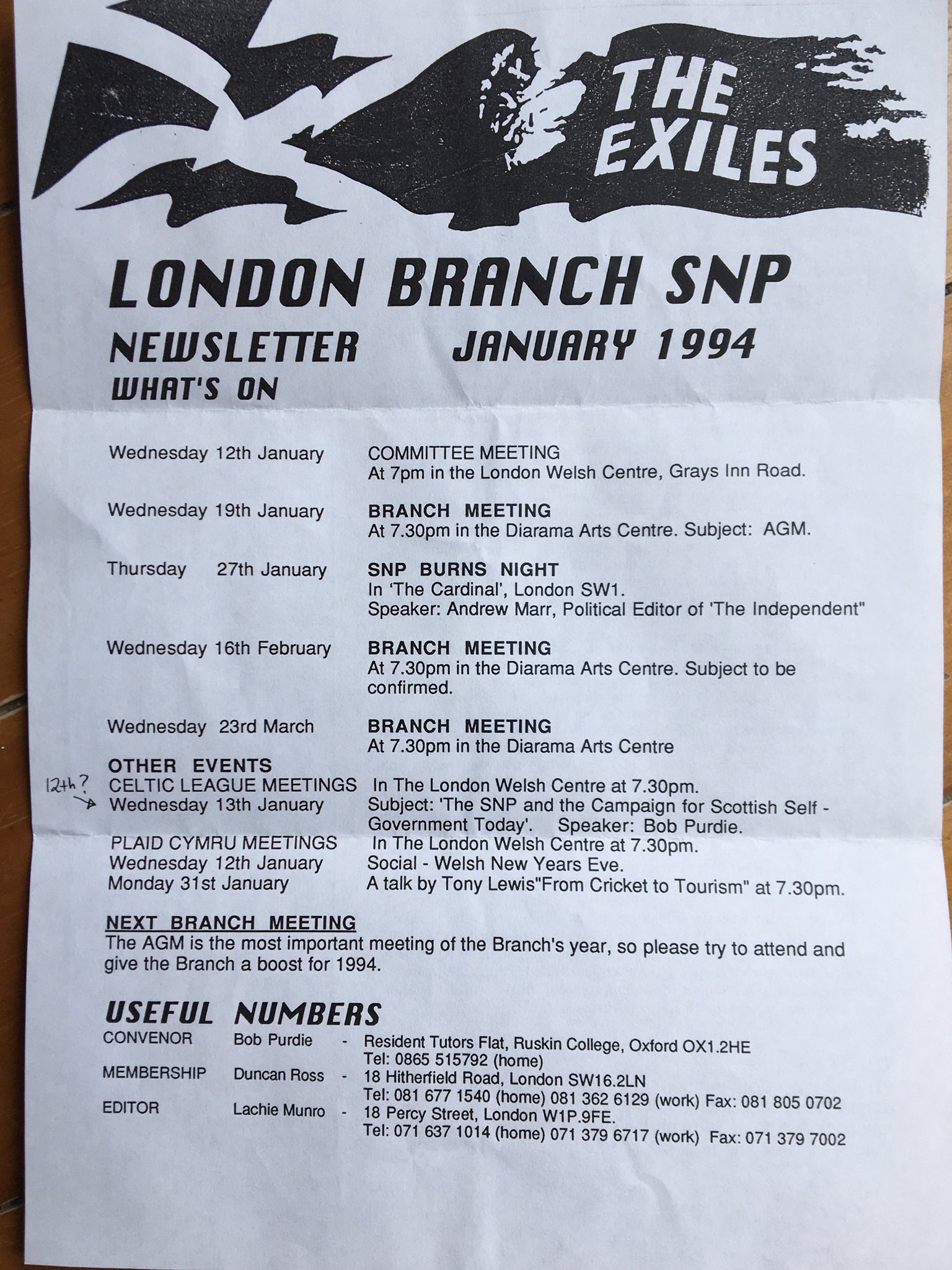
'The Exiles', January 1994 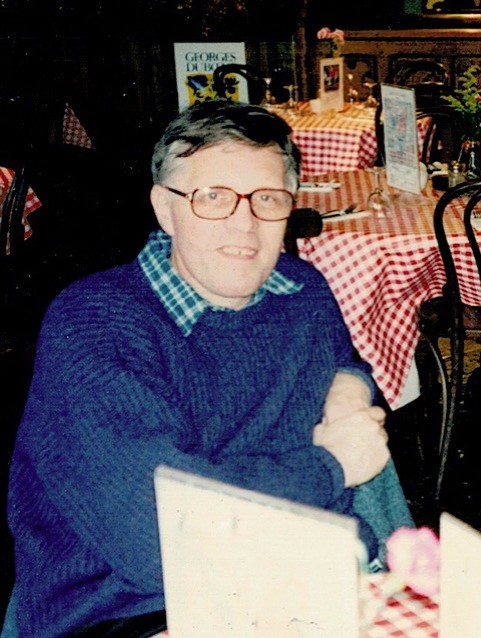
Bob Purdie 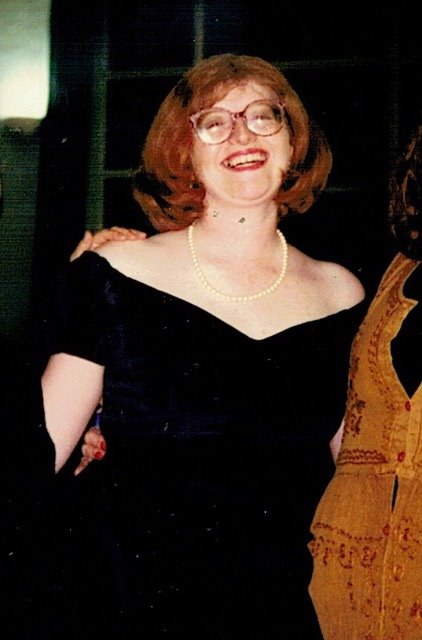
Lesley Backhouse - 2000s
Building a reputation for the Branch and the Party
Paul Martin was the decade's first convener in 2000. Following Paul's tenure the branch held its first hustings for branch convener, with Jim Orr edging out David Munn in a tight vote. However Jim soon returned to Edinburgh where he became a councillor, eventually resigning the party whip.
John Green once again became convener with Alyn Smith as branch secretary. Alyn and John both stood at Westminster elections in 2001, Alyn in Edinburgh West and John in West Aberdeenshire. Neither were successful but both Alyn and John held the party's share of the vote, despite there being a downturn in the SNP national vote in 2001.
Alyn would go on to a long and successful spell as an MEP in Brussels and Strasbourg, becoming leader of the European Free Alliance parliamentary group, with which the SNP are aligned. Alyn was elected as MP for Stirling in the 2019 election and is the party's foreign affairs spokesperson at Westminster.
The last editor of 'The Exiles' was Peter Morris, who brought real gravitas to the publication. Much of the focus was on policy and the branch followed this up by hosting an economics forum, chaired by a branch member Rod Baptie, at the party's annual conference in Inverness. This was a real coup as it attracted top guest speakers including MSP and former cabinet secretary Alex Neil and former National Treasurer, MSP and minister Jim Mather. The forum garnered a large and appreciative audience.
Rod's business was able to give the branch access to a call centre and such centres continue to be a focal point of the branch's campaigning activities. One of our call centre activists was Stefan Tymkewycz, who went on to become a councillor in Edinburgh and later an MSP for Lothian region. Stuart McMillan, who was also elected to the Scottish Parliament in 2007, was a branch member in the first half of the decade.
Rod Baptie was also responsible for organising and running large and memorable Burns suppers at this time, with guest speakers including Andrew Wilson, Bruce Crawford, Dorothy-Grace Elder, Tariq Ali and Bruce Kent. We also had the pleasure of Sheena Wellington singing for us at a Burns supper; Sheena famously sang at the opening of the Scottish Parliament in 1999. The suppers proved major fundraisers and at party conference in Motherwell we were able to present a cheque for £4,000 to John Swinney to support the 2003 Scottish Parliament election.
The 2000s also saw the election of Jane Morrison, the second woman to become branch convener. Jane was a Stornoway native and a Gaelic speaker with a wealth of business experience. Her sudden and untimely death left branch members devastated.
John Green again became convenor and it was during this period that the first tentative steps were taken to bring the branch into the internet age, with the creation of our first website.
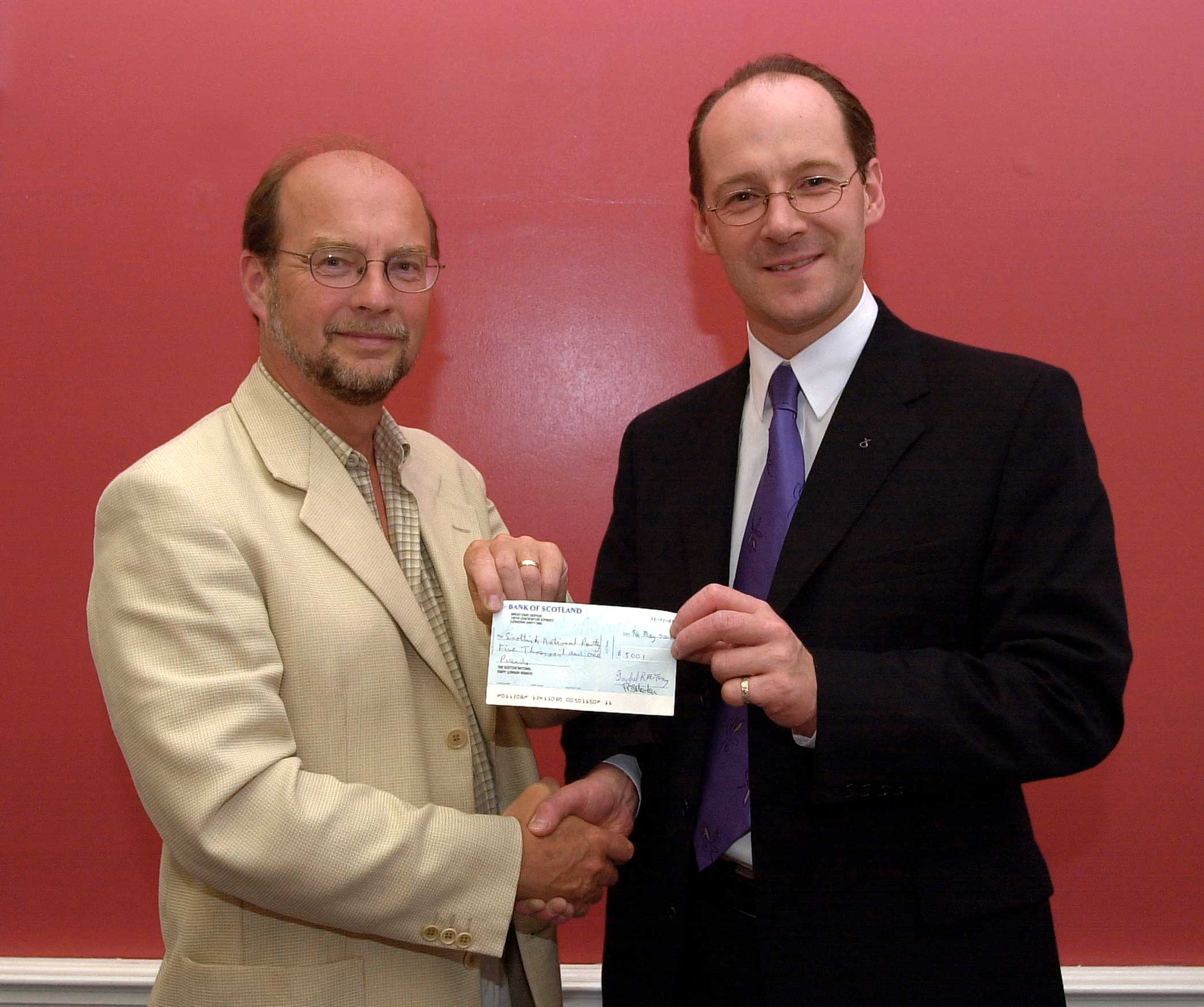
John Green presents a cheque to John Swinney - 2010s
Consolidation and independence within our grasp
The 2010s would be the most significant decade for the London branch, and indeed for the party since its founding in 1934.
David Nummey took over the convenorship of the branch in the lead up to the 2014 referendum and beyond. David proved to be an outstanding convenor and the branch was deeply involved in pro-independence forums across London, active at our call centre and also in canvassing in a number of constituencies in Scotland.
A highlight of our canvassing in Scotland for the independence referendum was when we joined forces with magazine 'Red Pepper', and a group of more than 20 activists took the train to Glasgow to be greeted by a welcoming committee from Radical Scotland. A first-class weekend of meetings and canvassing took place and everybody was convinced by the end of the weekend that we could win the vote. Glasgow delivered a Yes vote but sadly, as we know too well, we did not carry the country.
Nevertheless the referendum brought the branch a huge increase in membership, jumping to more than 700 from the 100 which had been our average for many years. The branch meeting of the 14th October 2014 at the Hoop & Grapes pub attracted the largest attendance at a meeting to that date (the landlord was concerned that we breached the fire regulations). All in the branch knew that this was just the beginning of the renewed fight for independence. David guided the branch expertly through this massive expansion with a range of guest speakers of the highest calibre. The large numbers attending necessitated a change of venue as our room upstairs in a pub proved far too small. We moved to a club near Borough market, the best venue we had ever used, with all the facilities we needed including disabled access.
Russell McLean took over as convenor in 2018 and continued building on the good work that David had put in place. Russell also became the first member of the branch to be elected to the newly formed Party Policy Development Committee. The London branch had been successful at annual conference in ensuring that one delegate from branches outside Scotland should be represented on this influential committee.
Russell had to step down as convenor in 2020 when he secured a posting to New York. Finlay Royle became convenor and continues to lead the branch into the 2020s – which we firmly believe can be the decade when Scotland secures her independence.
Alba gu bràth!